▌Project Overview
You don't want to use single-use plastic for your to-go food or delivery food,
but it's hard to prepare or carry your own containers in your busy life?
Or you don't want to use plastic bags for your grocery?
You can now use DOPE!
Role
Lead Product Designer
Research Assistant
Duration
October to December
2022
Tool
Figma
Adobe Photoshop
Adobe Illustrator
Team
University of Washington
HCDE 518 User-centered
Design Group Project
Team Member
Abby Starnes, France Yang, Karlton Lattimore, Leah Oh
My Contribution
Conducted 2 one-day diary studies, 60minutes user interviews, and competitive analysis. Made User Personas, Design system, and User flow. Led design process from Medium fidelity to High Fidelity, and iterated design process.
▌User Personas
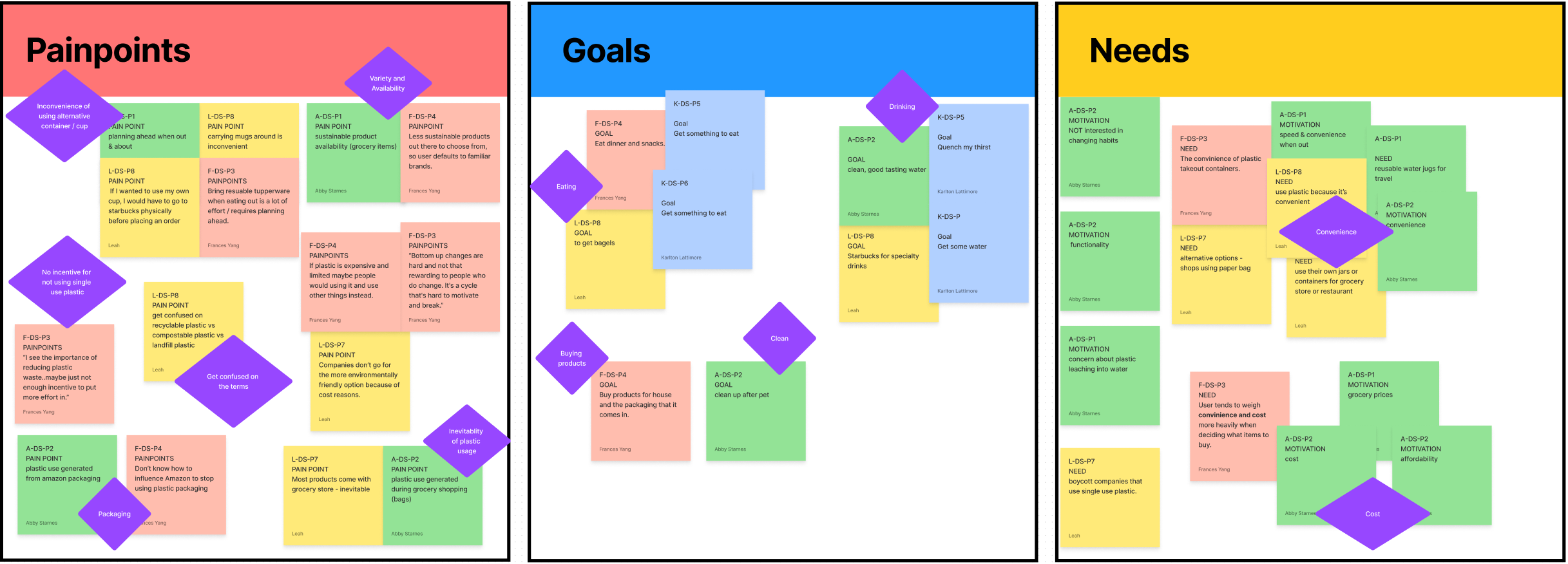
We created personas using the research findings gathered to help guide us through our ideation and design process.
We continuously referenced back to the primary persona to make sure we are focusing on addressing the right audience our research supported.

.jpg)
▌User Stories
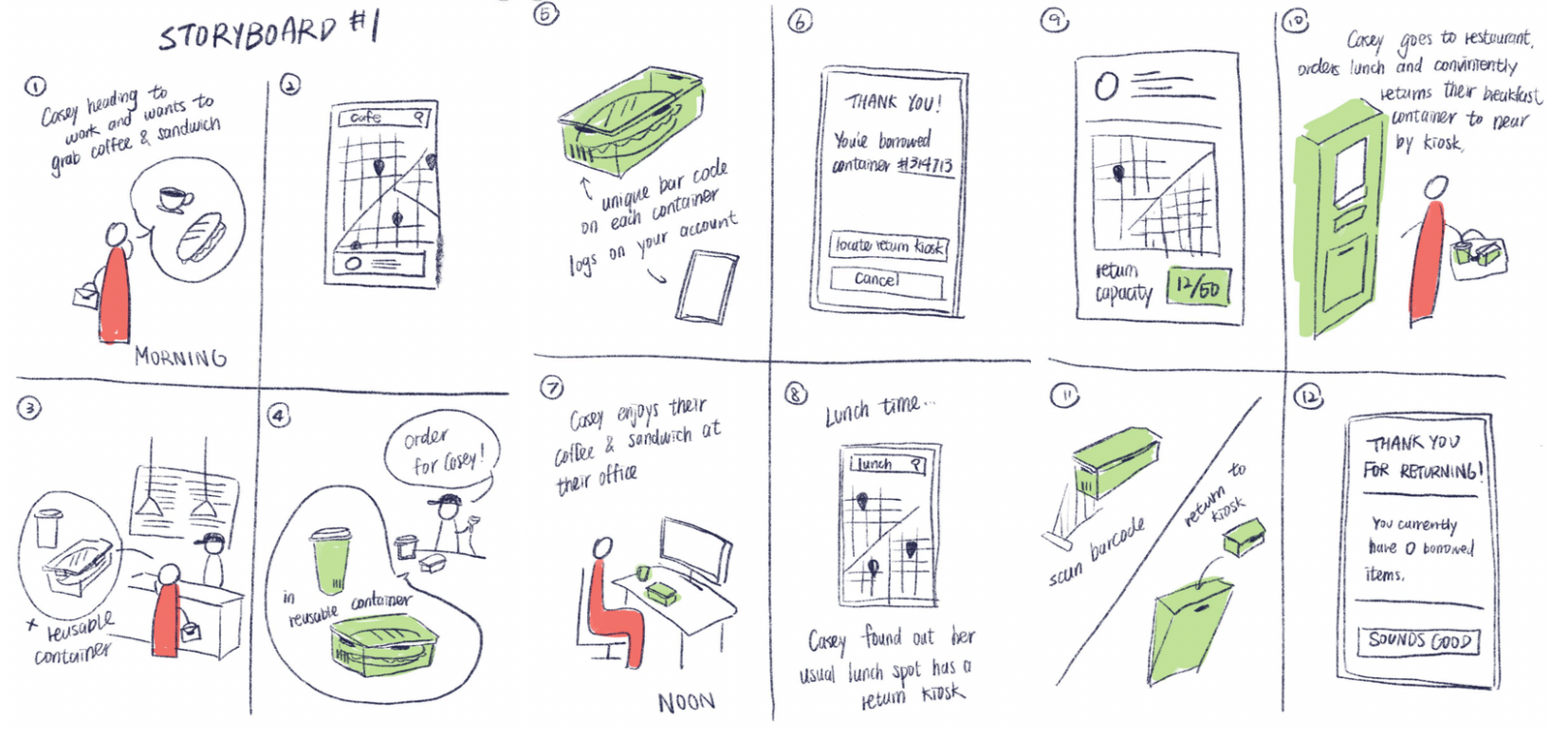
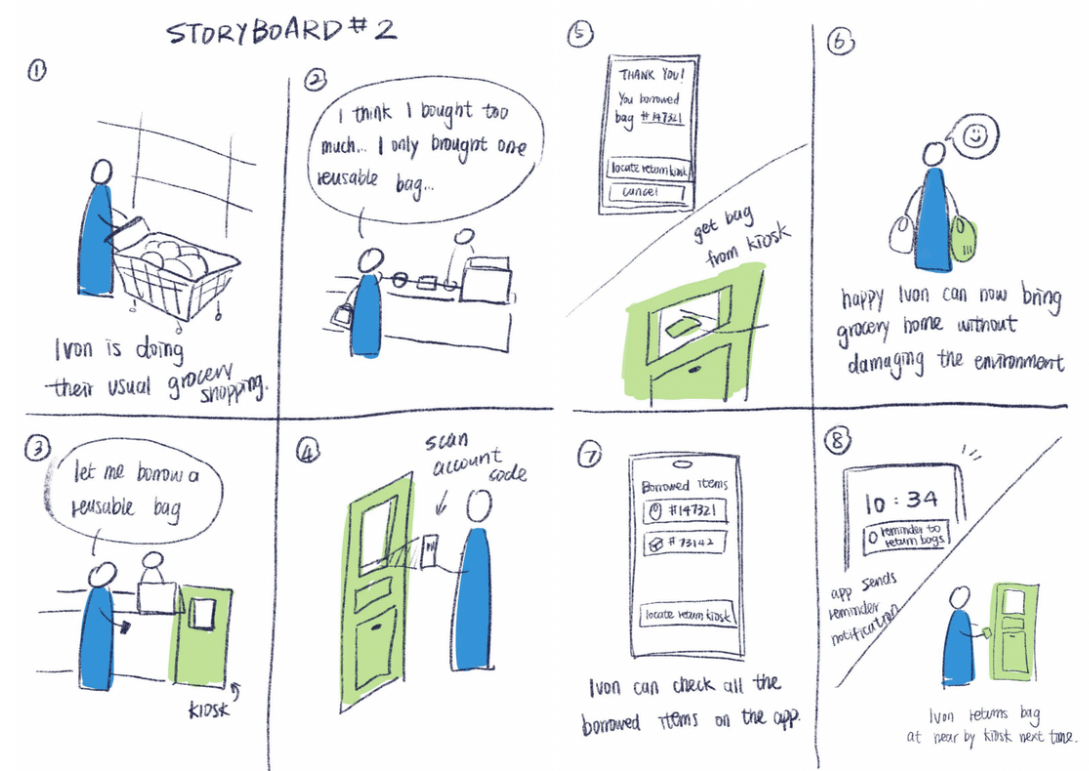
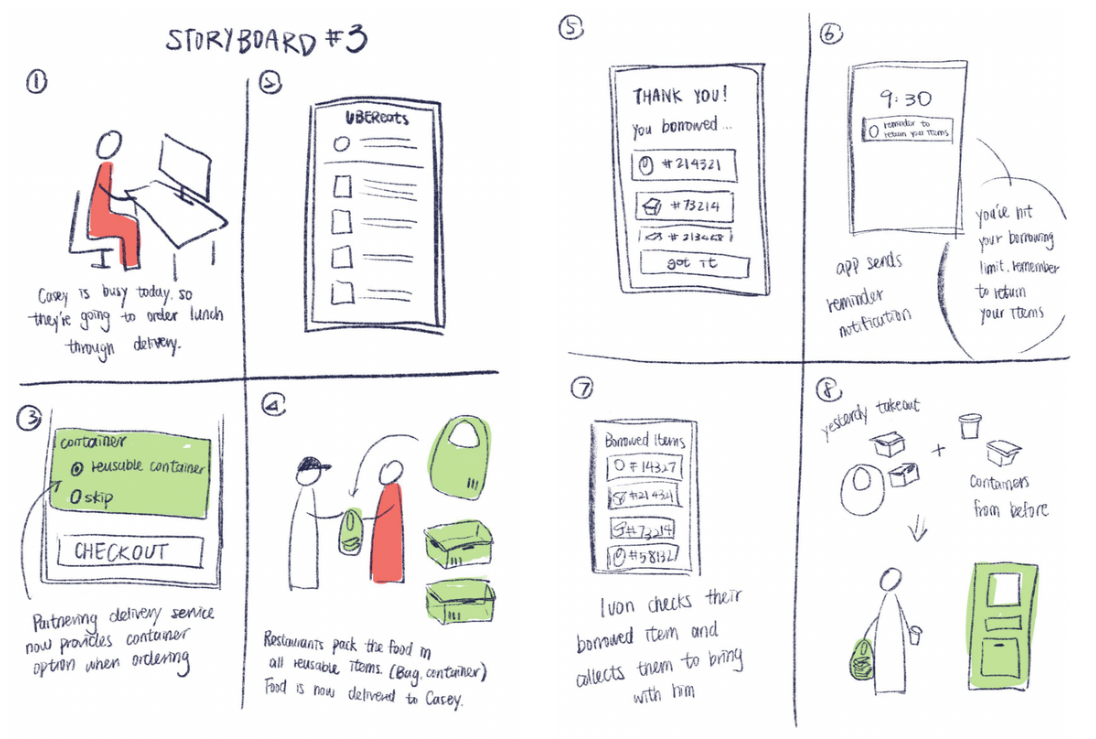
We created three different user journeys story board using the four design goals that we previously listed.
It helped us ideate various solutions and imagine the ideas feasibility.
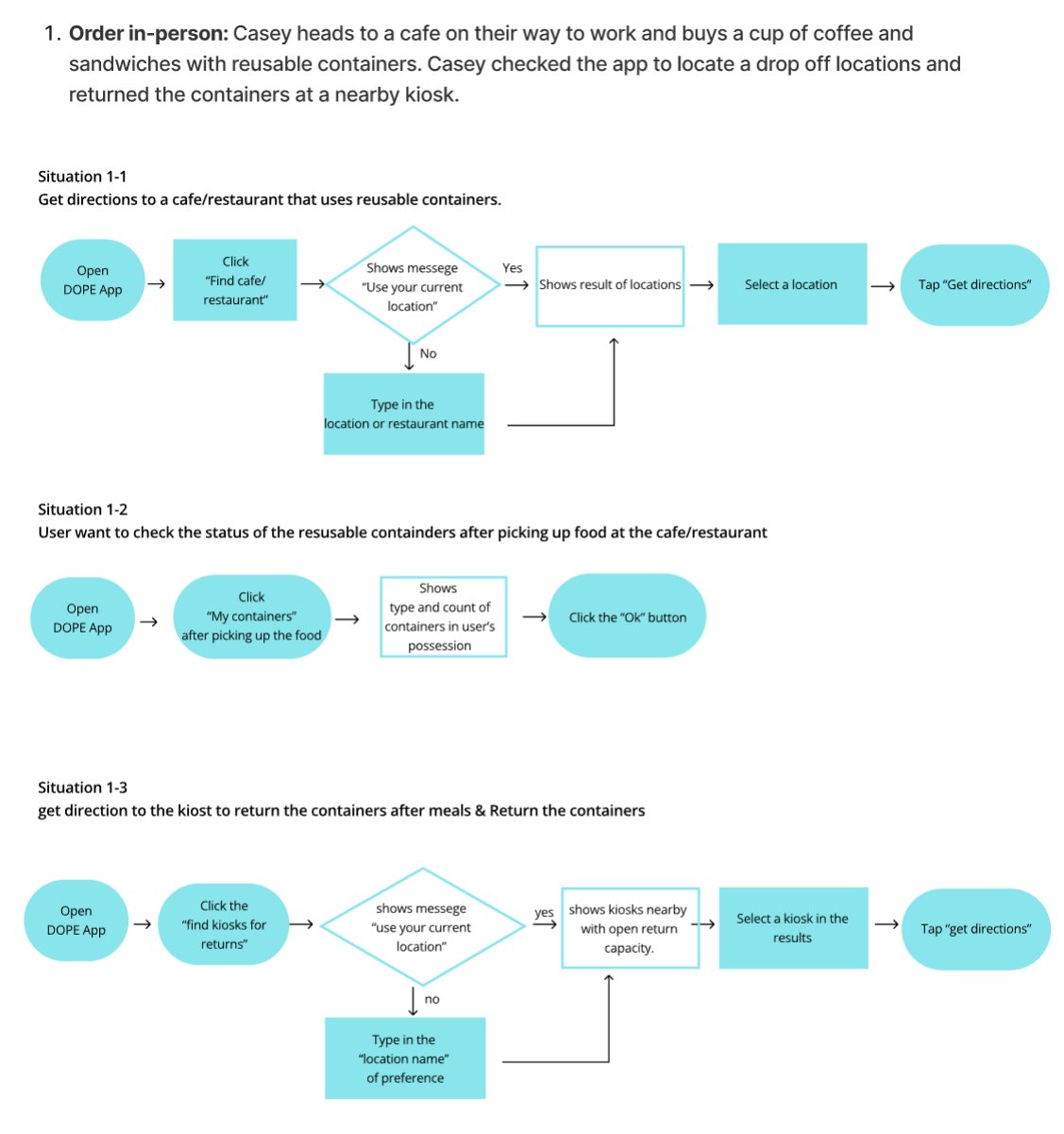
Story board 1: User buys takeout and uses the DOPE container and kiosk.
Story board 2: User goes to the supermarket and uses the DOPE kiosk to borrow reusable bags.
Story board 3: User orders food delivery service and chooses to use DOPE containers.
▌Information Architecture
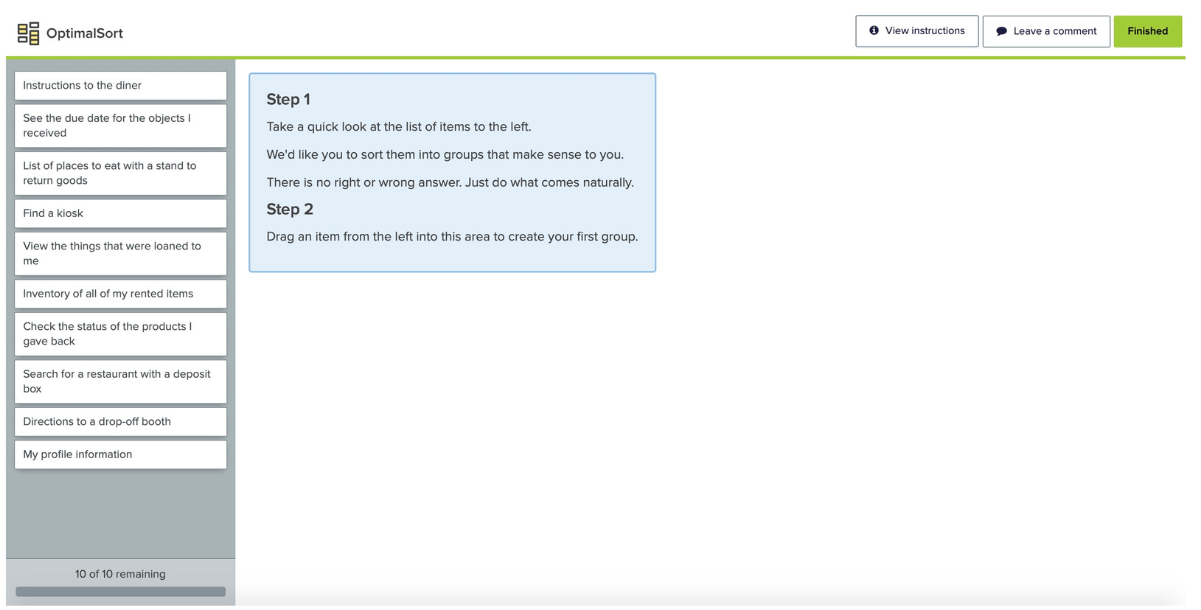
Card Sorting
We created this to guide the creation of the medium-fidelity prototype.
How should the DOPE information content be organized in order to align with users’ mental models?
7 participants were asked to sort cards into categories that make sense to them for both our app screens and kiosk screens.
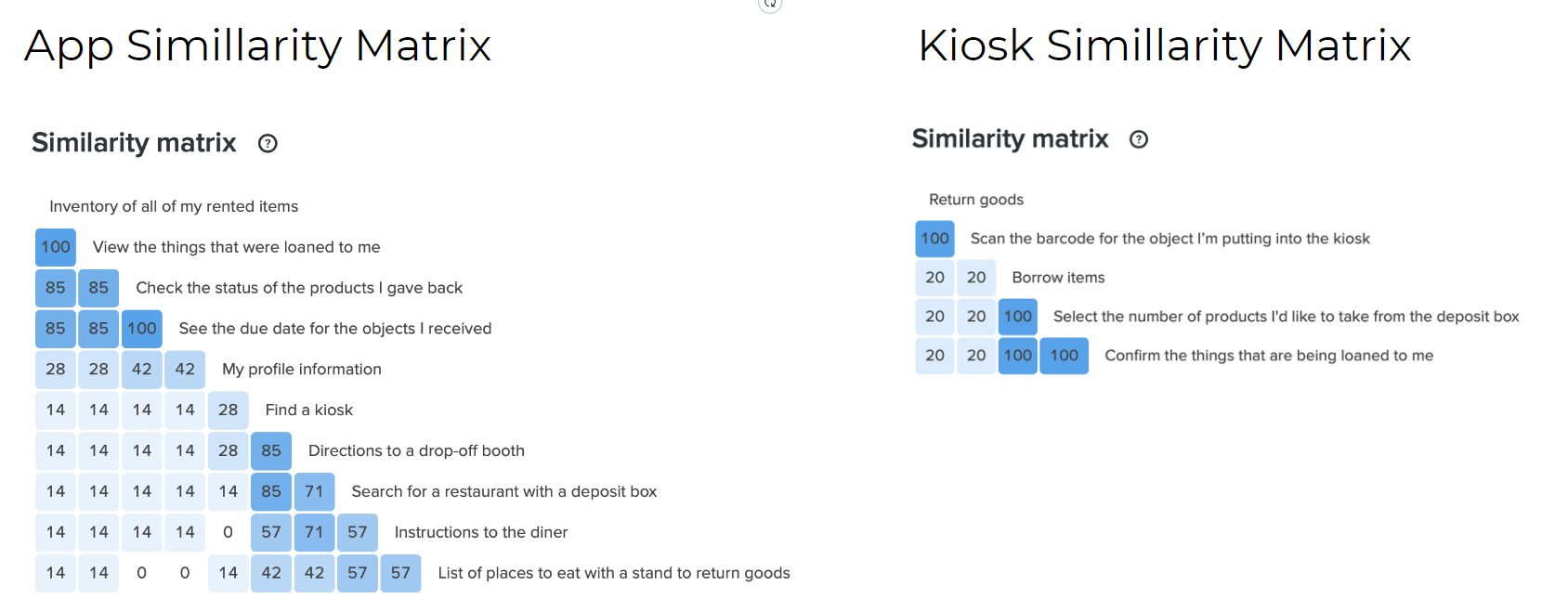
Similarity matrices for the cards tested for both the app and kiosk were created. In addition to a standardization grid, these findings helped us understand what content users associate together to influence the creation of the information architecture.
▌Medium Fidelity Prototype
We created medium fidelity prototypes for a usability test
App
Medium-Fidelity Prototype link
Kiosk
Medium-Fidelity Prototype link
▌Usability Evaluation
3 moderated, remote/in-person qualitative usability study.
We decided to do a qualitative usability study because:
We were early in design development and want to focus on frequent iterations
We wanted to identify usability problems at this point in the design
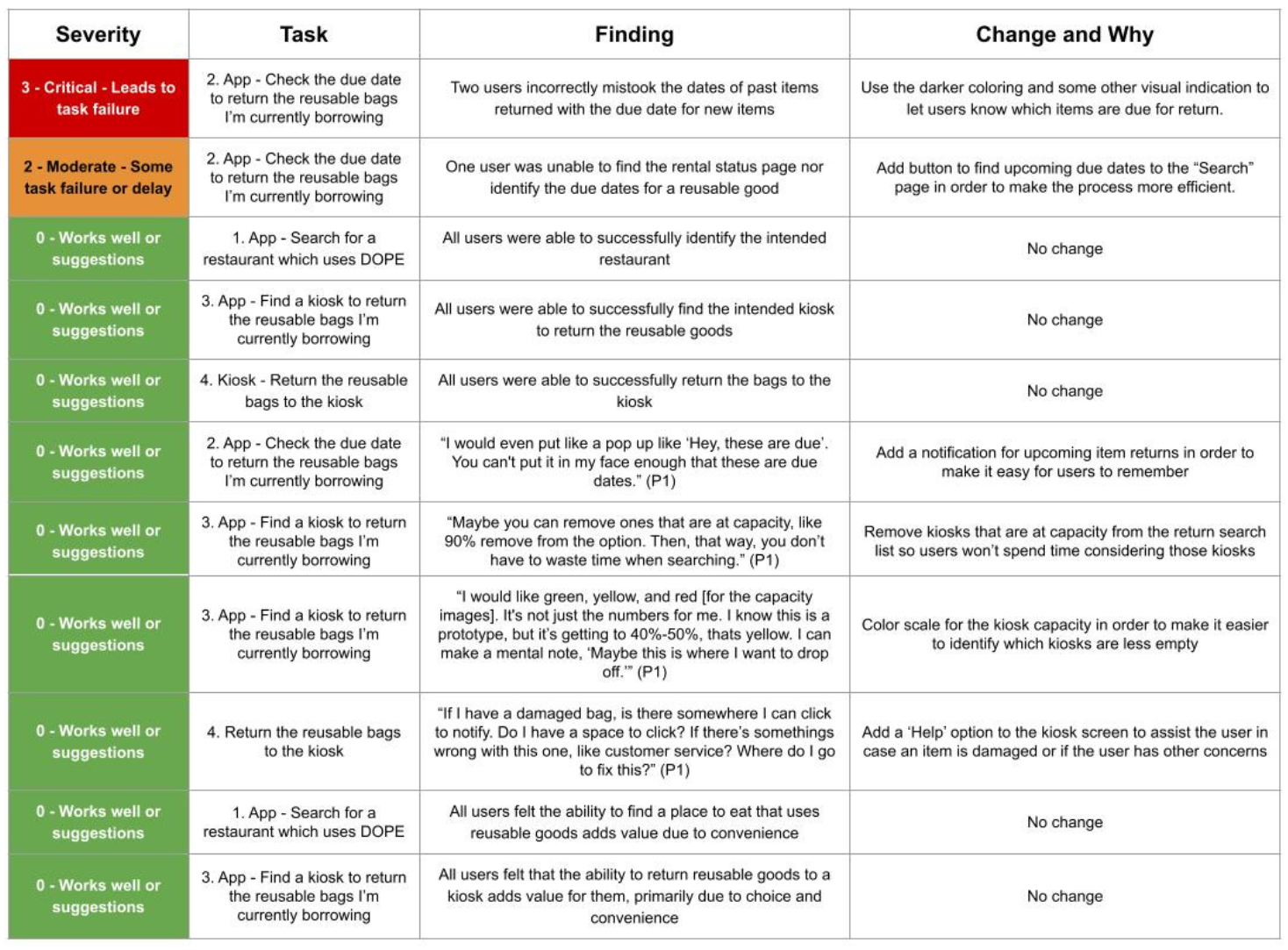
We created this table in order to synthesize on user feedback received through usability testing. This was used to create a better experience in the hi-fi
▌High Fidelity Prototype
We created this to turn our vision into reality. This will help developers fully understand what to move forward with as well.
App Main feature 1
Restaurant/Cafe Locator
-Users can search for participating restaurants/cafes
-Shows information regarding the participating location
-Users can get directions to participating restaurants/cafes
[Prototype Link]App Main feature 2
Rental Status+Kiosk Locator
-Users can check the status of borrowed goods and the due date
-Users can search for nearby kiosks and get directions
-Users can view the return and rental capacity of the kiosk
[Prototype link]Kiosk Main feature 1
Returning Reusable Goods
-Users can return reusable containers/bags directly to the kiosk after usage
[Prototype Link]Kiosk Main feature 2
Borrowing Reusable Goods
Plug-in
Delivery App Plug-in
-D.O.P.E. can be used as a plug-in to the delivery app
(Doordash, Grubhub, Ubereats…etc.)
-Users can choose to use D.O.P.E containers when ordering food on the delivery app
[Prototype Link]

.png)

.png)

.png)
.png)
.png)